All about numbers

02.10.2012 - 20.12.2012


Some 'installation shots' of a mini-show we put on in the studio with Yoon Jung Kim. An opportunity for both of us to play with the possibilities in the new work, nothing quite finalised, but an informal moment of assessing where we are and enjoying the dialogue the work carries out without us saying a word... Later, we started a coffee morning gathering by looking at it again and hearing everyone first reactions to the work.


Like the Facebook Page


Little news flash: The Trelex Residency now has a Facebook Page. More photos and announcements about events at the Residency will be posted there. The blog will be continued as a log of the residents who have come, as a place to check availability and with comprehensive information pages (above in green). But please 'like' the page on Facebook if you haven't done so already.

http://www.facebook.com/TrelexResidency

A collaboration born in Trelex

Over dinners in the studio kitchen, Melanie Ward and Yoon Jung Kim started a drawing conversation...


...which turned into a blog: http://themoonyells.tumblr.com/

The atmosphere in the studio changes with every resident but these drawings are the best portrait I can think of for what the residency feels like at the moment: quiet, concentrated, quirky, disciplined with every day yielding new surprises for everyone. So infectious, I have started doing small pen drawings myself.

From Borowicz: Resident and Parent


25.08.2012 - 11.09.2012


When Nina offered me an opportunity of taking up an art residency with my daughter I was very excited. I was also slightly hesitant about being able to make the work and ensuring that both of us enjoy our time in Switzerland. Erring therefore on the side of caution (and due to my other commitments) I booked two weeks at Trelex. I can only stress that two weeks is a short time and I would recommend a stay of a month or longer at this unique residency. 


Being picked up at the airport and invited to share the initial meals eliminated any travel concerns. As I only had a couple of weeks, I decided to focus on exploring the immediate surroundings of Trelex and nearby town Nyon in favour of sightseeing Geneva (although this would be easy to do with kids). I found going shopping to Nyon easy, and my Nina loved these little train rides. I combined these trips with strolls around the historic town, relaxation at the lakeside and nice coffee. There are some attractions for kids in Trelex (walks, playground, exercise circuit in nearby woods, visits to local bakery for morning rolls) and plenty more in Nyon. The most surprising however is the house itself – large with numerous rooms often connected in a maze-like fashion. Combined with an enormous garden with a hidden play house, vegetable garden and swing/hammocks area, it creates an amazing adventure ground for kids. 


The family was very welcoming and little Nina quickly made friends with the other children - they all were sharing toys, films and even a few evening baths. The family invited us to join in their trips to the lakeside for an evening swim or to have a barbecue picnic in the woods. I will definitely miss drinking afternoon tea with two little girls who would kindly accompany me in a lady-like manner. 


The living/working space felt very comfortable and easy (all I needed to do is ask). Spacious studio areas were easy to rearrange depending on my needs and provided inspiration to keep going back to making. There was a variety of art supplies and tools to hand, plus and interesting range of materials in outdoor sheds which were great to use for temporary structures. I brought some materials with me including packaging and fabrics but also used the contents of the sheds and garage. 


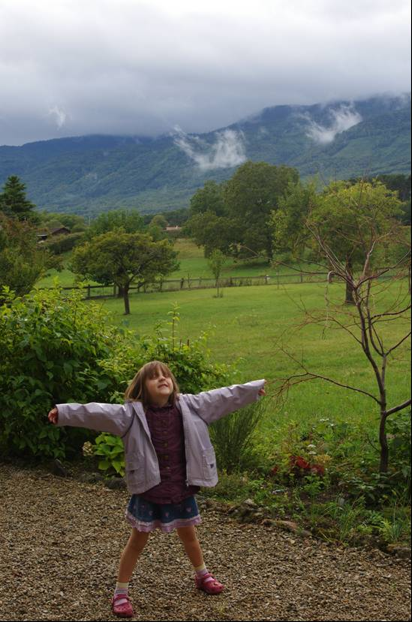
I found making work in Trelex easy, at the same time enjoying trips out, playing with kids and experimenting in the studio kitchen. I also managed to squeeze in a fair bit of late night writing for my university essay (though sometimes I found it hard to stay away from the artwork). I was particularly keen to capture the lighting conditions in the afternoon and having my daughter nearby proved beneficial. She was happy, in exchange for a chocolate reward, to perform for my photographs and short films.


I arrived at the beginning of the residency with few ideas I wanted to test and possibly develop towards my upcoming show at the Slade. Much of my past work has referred to the idea of home as a spatio-temporal concept and the more recent inquiries dealt with negotiating perceptions about art, labour and the domestic. In a way the situation of the residency was a form of negotiation in itself. I have become intrigued by boxes as packaging but also temporary structures: Emptiness offers itself up as the box opens its folds. The surprise of the flat pattern, the icon both familiar and unidentifiable. Then the folds collapse back and carve out a bit of space. Walls are formed around a promise of home. For a short while the structure lies to us of its solidity until it dissolves again


During the last days of my residency I overlapped with Yuki Aruga and we started to strike up some great conversations. I would have loved to continue these as well as the conversations with Nina which I feel have also only been started. The final presentation to Nina, her husband David and a few local residents was not only enjoyable but it became a constructive critical debate. I particularly liked David’s comments on loose artist talk and contrasting these with his philosophy background and a need for making the arguments clear and understood (paraphrasing “you may not need to agree with me but I need you to understand me”). Many of the points raised still echo with me and I only wish I could have stayed longer...


About Anja Borowicz

25.08.2012 - 11.09.2012


I met Anja when visiting the Slade where she is doing the same degree I just finished. I was drawn to her studio wall because of the graph paper, indications of a systematic approach and the presence of concerns I interpreted visually to be similar to my own. Then we struck up a conversation about art and motherhood. Anja agreed to be the first resident to come with a child, an opportunity I was keen to provide as residencies around the world either explicitly do not welcome children or welcome them in principle but than have very little in place to help their parents be both parents and artists.

Whether all parents who come here in future will juggle Art and parenthood with the same virtuosity as Anja and every four year old will have such amazing capacity to entertain themselves as little Nina remains to be seen. But the whole family missed them when they left.


Anja Borowicz is, by her own admission, in a state of transition between painting and sculpture. She is exploring the notion of the domestic, through the use of household materials but also via a reflection on the negotiations between the opposed and conflicted spaces of the home and of the artworld.


Packaging from cereal, tampax and soap become minimalist sculptures in a formalist arrangement. The outline of a triple pack of socks ends up looking like a menacing weapon. Night time conversations take in the  the homeless, consumerism, russian icons, the power of the museum, our doubts about painting and out attraction to it, strategies of production.


I am completely drawn in by the meticulous presentation of a rainbow array of domestic liquids which Anja has used like paint and pigment in her work. Cleaning and beauty products take on the precious qualities of fine art media but one doesn't get a sense that Anja likes house cleaning or facials, on the contrary. Anja's work is persistently experimental, but too serious to be playful. It feels more like an expression of her frustrations with negotiating an unsuccessful compartmentalisation and resisting stereotypes. The gestures in her work have become lighter but tend towards something more and more personal, perhaps Anja's own sense of place and belonging.


The wall in the studio moved several times during Anja's stay: at an awkward angle first, then into a very open large studio standard and finally halved the space into something more intimate. The window which one often ignores other than for its light became much more prominent against the delicate and quiet interventions.


Anja took the opportunity of the residency to work with her daughter in a series of works with boxes reconstructed in transparent or diaphanous materials. The anonymous child packed in a box could be grim or claustrophobic. Instead she looks protected, as if Anja is trying to shield her.

More details of Anja's work can be found on her blog here.

Natasha Bird looks back on two weeks in Trelex

23.06.2012 - 07.07.2012


What Nina and this residency gave me was the much needed time and space to freely experiment, without an agenda or specific ‘end-point’. My two weeks in Trelex have provided me with endless starting points for continuation back in London.

Interesting architecture and spaces are often the starting point for the aspect of my practice that is largely site-specific. So the stunning vaulted ceiling and supporting beams of the studio space became a central inspiration to many of the experiments I made on the residency.

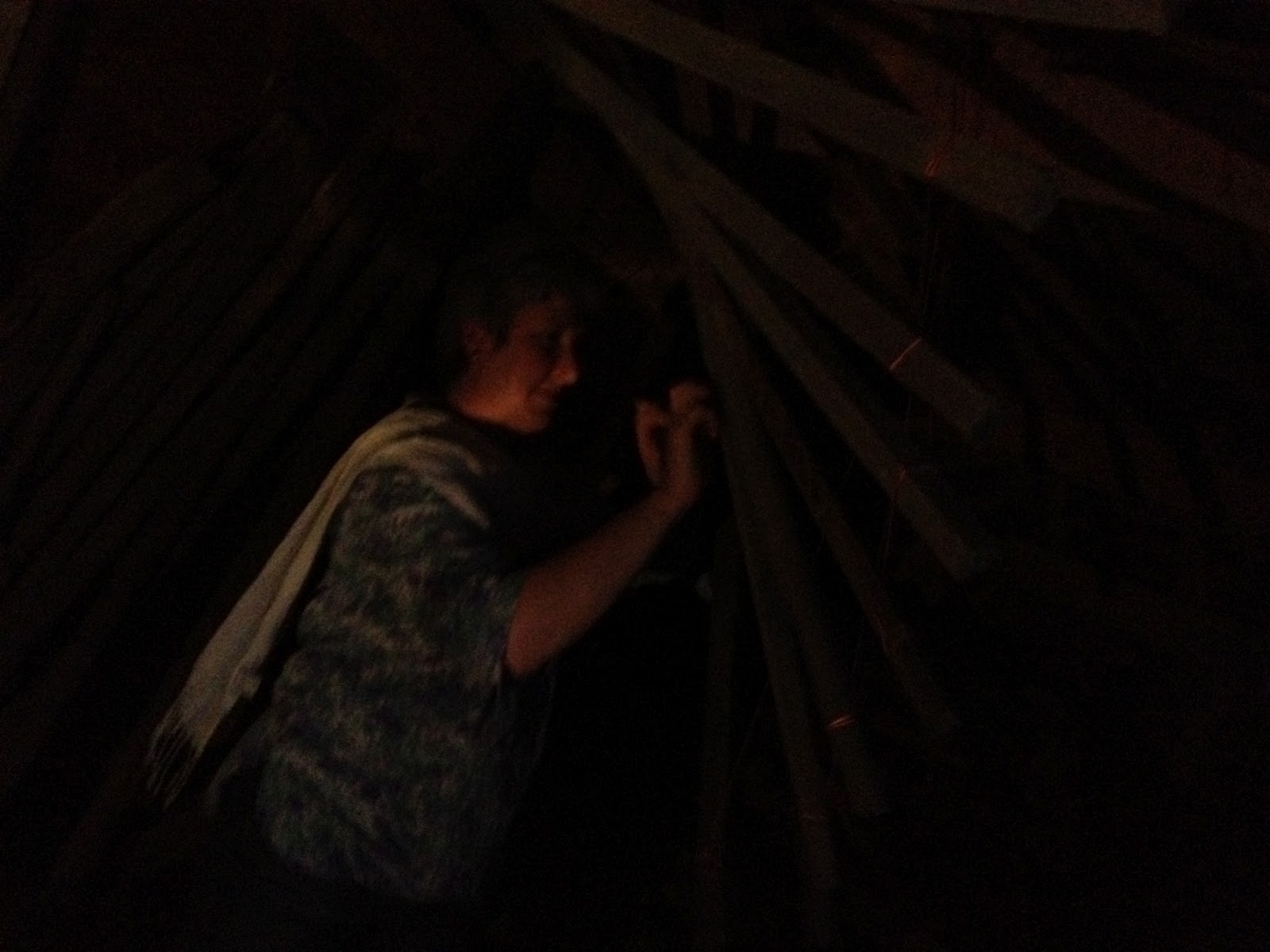
The garden and outhouses also provided scope for me to experiment – spending much of my time making an installation inside one of the woodsheds using found wooden staves (which I later found were used as supports for the vines, as this is wine-making country!).  The outhouses also provided me with a wealth of found materials to borrow as weights and props back in the studio. 


As a nice balance to the very physical constructions I was making, I also spent much of my time filming the mountains from my window, with their ever-changing landscape of mist and cloud. 

The residency felt like a massively productive time for me.  With the living quarters located on the top floor as well as the studio, I often continued to work late into the evening, encouraged further by Nina’s great collection of artists’ books and periodicals.  I found the surroundings of Trelex the perfect environment in order to create – the studio provides the physical space and all the facilities you could want, and the natural landscape of Switzerland means when you need to digest an idea, or are at a slow point, you have the view of the mountains or a walk through a sunflower field to jolt you out of it!!


During the second week of my two week stay, Nina arranged for a few of her friends to come to view the installation I had been making in the woodshed, and I gave a short presentation on my work.  This was exceptionally useful to me, as after a week of making without analysing my actions, it was really productive to have an informal chat about some of the themes that were emerging, and links I would not have made myself.  It also helped me to clarify my interests, on certain things that I would like to develop back in my London studio. 

Trelex residents at the presentation Natasha gave.

The most important thing about this residency in my opinion is that Nina wishes the artist to use the time in whatever way is most useful for the them – be that a planned project, trying something completely different or continuing on a well-known thread. 

A local Pianist drums out a tune on Natasha's sculpture during an evening viewing. 

In terms of leisure time, I spent quite a bit of time gardening (thinning the carrots!), and swimming in Lake Geneva, when Nina’s family were so kind as to let me tag along when they went. In addition, Trelex's local yoga teacher Claire, is so kind as to allow artists on the residency to attend her classes once a week.  She is a fantastic teacher (even humouring a total beginner like me!) and when the weather is good classes take place in her gorgeous garden.

I would recommend a trip into Geneva (the train ride is so quick and easy, and you can pop off at the supermarket in Nyon on your way back). There I would recommend visiting the Museum of Modern and Contemporary Art (MAMCO) which is massive and very good (check what they have on as it might not be permanently open).  I then walked across Geneva to the fountain, and caught a boat (a bargain at 3.50CHF!) back from the other side of the lake, which brings you back to near Cornavin (the main station) – should be shown on the map. 

I also made a geek pilgrimage to CERN to learn about particle physics – free, well worth a visit and a very easy tram journey from the main station.  If you book 3 months in advance you can have an inside guided tour from a physicist!  I just went to the visitor centre which is fascinating and worth the trip in itself!  


Also, ask Nina to direct you on the 1.5k walk round the fields near the house – a perfect pre-dinner-reflect-on-the-day length!

About Natasha Bird

23.06.2012 - 07.07.2012


I normally try to write something about each resident towards the beginning of their residency or before they go but with Natasha, things have been a little different. Natasha arrived expressing a desire for a period of very free experimentation, feeling that her studio practice in London had become somewhat the victim of her perfectionism, of a need to always make finished pieces. Her presentations of her work and the ideas that have inspired her to date threw up lots of questions and possible directions to explore.

As a result, we had many interesting discussions about strategies of production, about ways of entering the studio and approaching the blank page or space. The result was an amazing two weeks of very free experimentation, producing a large number of sketches in space.


The constants in Natasha's work are a concern with the forces and energies that make and animate a space. Thus, wires and string create tensions between different architectural elements in a room, seeming to probe the strength of their relationship. Weights hang off or push against elastics, still, motionless but always fixed with very basics means so that I, for one, can't help imagining the consequences of a log slipping, a knot coming undone or an elastic snapping.


Lines sub-divide rooms: again, very still. But these lines may be piano wires plucked by little cogs on motors so that the air in the two halves of the room hum and resonate, challenging the division. But even still lines, seem to affect the spaces around them in dynamic ways.


Natasha talked of her fascination with Brunel's tunnel under the Thames. Of how the intricate structures of scaffolding, bracing against the weight of the earth and the Thames above, had at times collapsed. She is particularly fascinated by the towers that had been built on the surface and then slowly sunk into the banks by excavating their foundations. In both cases, there is a sense of structures pushing against something ominous, creating a space against all odds.


Indeed, Natasha is more interested in older, victorian experiments teetering on the verge of failure than in modern, state-of-the-art engineering solutions. Perhaps this is why, the studio with its large creaking rafters was such a fertile ground of experimentation for her.


Equally, the tractor shed with its stash of used stakes from the vineyards and a find of old slate roof tiles proved irresistible. Her use of brightly coloured, almost fluorescent string only seems to emphasise the old, used quality of the other materials.


Her sculpture always has a slightly contingent feel and Natasha is very clear about her desire that they be 'honest', that is that they don't try to conceal the means of their making. In this and in the systematic nature of her work, she approaches the poetry of a scientific mode of enquiry, which was most apparent in the sketches she made of the mist and clouds rolling down the side of the Jura mountains outside her bedroom window, a series of works that seemed to open up a whole new set of possibilities and offered an interesting contrast to her more static installations.


Natasha has already talked of wanting to come back to develop some of these works further which means I can look forward to more discussions about the nature of Art, and how Art is enabled. And perhaps to more barbecues and caipirinhas, too...

More details of Natasha's work can be found on her website here.